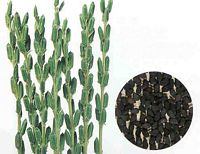
Organic Black Sesame. are an extremely good source of calcium; studies have shown that one gram of seeds contains approximately 85 milligrams of calcium. Black sesame seeds also have high amounts of protein, phosphorous, iron and magnesium. In some patients, black sesame seeds are used to help patients recover from serious illnesses and fevers, treat constipation and promote regular bowel movements. Some practitioners recommend using black sesame seeds with polygonum to keep a person's hair looking rich and dark.
Ayurvedic medicine has used sesame oil to help treat teen acne and control eruptions, as well as keep the skin soft and supple and tighten facial skin, particularly around the nose, and has been used to help heal minor abrasions. In many traditional Mideast societies, it also is used to protect children against common skin pathogens easily transmitted from animals, for example, ring-worm fungus, and is successfully used in the hair of children to treat lice infestations. In some Asian and Middle Eastern countries, the oil is used to treat diaper rash by neutralizing the acidity of urine and lessening the chafing of cloth diapers. In these areas, school-age children have sesame oil swabbed into their noses to protect against air-born viruses and bacteria. As nose drops, sniffed back into the sinuses, sesame seed oil has been used for decades to cure chronic sinusitis.
Wildlife Food Increasingly, sesame seed is produced to sell to landowners and government agencies for wildlife food plots. The seed is used to attract and feed game birds. Farmers plant sesame on ditch banks and along wooded creeks to sustain quail and pheasants. In South Carolina, farmers plant sesame for dove hunting.
50 seeds
Black Sesame Seeds: Black sesame seeds (Sesamum Indicum L) are similar to the more common white sesame seeds. Black sesame seeds are not hulled, brown (golden) sesame seeds retain their hulls too, and the white seeds are hulled which exposes their true seed color. Lighter colored sesame seeds are used more in the West and in the Middle East, and the black sesame seeds are more popular in Far East cuisine. White and black sesame seeds can be used together for an attractive accent to any meal. Sesame seeds are rich in vitamins and minerals and offer several health related benefits. Black sesame seeds contain about 60% more calcium than hulled sesame seeds.
Sesame seeds are thought to have originated in India. The famous saying "Open sesame!" came from the sesame seed pod which bursts open when ripe. In Africa sesame seeds are called 'benne' and are used as food and for their oil content. Sesame seeds have been around for thousands of years, in fact it is said that when the gods created the world they drank sesame seed wine.
Black sesame seeds are more flavorful and have a stronger aroma than white or brown sesame seeds. Toasting black sesame seeds releases beneficial chemicals as well as enhancing the flavor. Black sesame seeds are rich in a fatty oil. Oil content is high, between 40% and 60%. The oil has a distinctive flavor, and is rich in antioxidants which give it a long shelf life. The seeds also enjoy a long shelf life and resist rancidity. After removing the oil, seeds are 35% to 50% protein. Sesame butter, also known as 'tahini', is a paste which resembles peanut butter. Tahini is made from ground, hulled sesame seeds and is used in Hummus and other Middle Eastern and Asian dishes.
Black Sesame Seeds are similar to the more common white sesame seeds.
Latin name: Sesamum Indicum L
Black Sesame Seeds are not hulled.
Black sesame seeds are more flavorful than hulled seeds.
Sesame seeds are 40 to 60 percent oil.
Sesame seeds are high in protein.
Black Sesame Seeds add an attractive accent to food.