|
"When you are inspired by some great purpose, some extraordinary project, all your thoughts break their bonds; your mind transcends limitations, your consciousness expands in every direction, and you find yourself in a new, great and wonderful world. Dormant forces, faculties and talents become alive, and you discover yourself to be a greater person by far than you ever dreamed yourself to be".
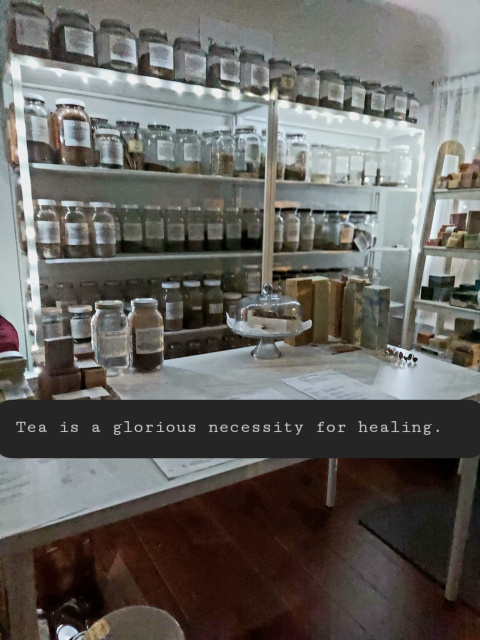
News this month: My shop is going to be closing down in Clovis only (amazingly, after all that effort to get it started!) but all things good must grow, strengthen and be allowed to flourish and this little herb shoppe deserves a chance at becoming a bigger and more recognised entity as well as the fact I aim to complete my herbal studies so I can open a small herbal therapy clinic alongside. Happily, I have outgrown my little herbal domain so a fresh start is on the cards and news shall follow about this new up and coming adventure. There is so much to organize for such a great and gigantic move, of course health and strength limited I have to pace myself which I have proven to be not very good at due to my drive of abundant enthusiasm and now my growing excitement at leaving and acquiring new territory. I am very exited to be working out plans for the second herb shoppe, larger garden and how this will benefit the local community and my most appreciated customers. So look out Texas here we come, it is a British invasion!
All in all things are looking hopeful thanks to you my wonderful customers that keep encouraging and supporting my fervent cause. Please read my wonderful feedback to see how much Amber's Organics is appreciated. It makes me richly blessed to serve.
Your own suggestions are always appreciated so do not hesitate to write to me at my email address. ambersorganics@yahoo.com
Featured products.
Oolong Tea (For Slimming)
Description
Oolong tea is superior in aiding weight loss. The effect of this tea is to help reduce fat and it can be taken 3 times a day. Instruction
Ingredients
- 4 rounded teaspoons of Green Oolong Tea
- 3 cups (850ml) of water
- Put Oolong tea in empty teapot.
- Pour boiling water on to tealeaves.
- Allow tea to stand 2 - 3 minutes.
- Pour tea into cup and allow to cool slightly before drinking.
For Migraine
1 ounce valerian leaves + ½ ounce of juniper berries + 1⅔ ounce of St. John's wort + 1 ounce of linden flowers
Procedure
Always use clean water to make the herbal tea, and prepare the tea in clean cookware of cast iron, glass or stainless steel (other than aluminum).
In the boiling water, add the given amount of the desired herbs. Cover the container and let the herbs steep for 10 to 15 minutes.
Never over-steep the herbs as it might have an adverse effect on the flavor as well as use of the herbs.
You can also add lemon and honey to enhance the flavor and aroma of your tea.
Strain the tea with the help of a regular tea strainer.
Read more at Buzzle: http://www.buzzle.com/articles/herbal-tea-recipes.html
Procedure
Always use clean water to make the herbal tea, and prepare the tea in clean cookware of cast iron, glass or stainless steel (other than aluminum).
In the boiling water, add the given amount of the desired herbs. Cover the container and let the herbs steep for 10 to 15 minutes.
Never over-steep the herbs as it might have an adverse effect on the flavor as well as use of the herbs.
You can also add lemon and honey to enhance the flavor and aroma of your tea.
Strain the tea with the help of a regular tea strainer.
Read more at Buzzle: http://www.buzzle.com/articles/herbal-tea-recipes.html
For Migraine
1 ounce valerian leaves + ½ ounce of juniper berries + 1⅔ ounce of St. John's wort + 1 ounce of linden flowers
Procedure
Always use clean water to make the herbal tea, and prepare the tea in clean cookware of cast iron, glass or stainless steel (other than aluminum).
In the boiling water, add the given amount of the desired herbs. Cover the container and let the herbs steep for 10 to 15 minutes.
Never over-steep the herbs as it might have an adverse effect on the flavor as well as use of the herbs.
You can also add lemon and honey to enhance the flavor and aroma of your tea.
Strain the tea with the help of a regular tea strainer.
Read more at Buzzle: http://www.buzzle.com/articles/herbal-tea-recipes.html
For Migraine
1 ounce valerian leaves + ½ ounce of juniper berries + 1⅔ ounce of St. John's wort + 1 ounce of linden flowers
Procedure
Always use clean water to make the herbal tea, and prepare the tea in clean cookware of cast iron, glass or stainless steel (other than aluminum).
In the boiling water, add the given amount of the desired herbs. Cover the container and let the herbs steep for 10 to 15 minutes.
Never over-steep the herbs as it might have an adverse effect on the flavor as well as use of the herbs.
You can also add lemon and honey to enhance the flavor and aroma of your tea.
Strain the tea with the help of a regular tea strainer.
Read more at Buzzle: http://www.buzzle.com/articles/herbal-tea-recipes.html
|
|
|
| |
And now onto something for your garden's delight!
2 Easy Compost Recipes to Get Your Organic Garden Growing
A healthy vibrant garden requires organic nutrients like carbon and nitrogen. Compost is a natural recycling technique used by organic gardeners to put nutrients back into depleted soil. It can be made at home by reusing leftover scraps from the kitchen and organic matter from the yard. Check out our article on the benefits of compost for your garden.
Making compost is like baking a cake or making soup. When you make it the first time or two, you use a recipe. The recipe contains a list of ingredients and an explanation of how to combine them. If an ingredient is missing or isn't added according to the recipe the cake or soup might fail.
This also applies to compost, there is a recipe. There are specific ingredients that require specific measurements. Furthermore, like your cake recipe the ingredients must be combined in a certain way for the recipe to succeed.
Below is a recipe for two different types of compost piles. One is high maintenance and will produce compost quickly in four to six weeks. The other is a low maintenance recipe and who knows when you will have compost. It could be one month, two months or even a year before you have usable compost.
Spring and fall are great times to start composting as there are plenty of ingredients available from your own garden and kitchen waste. So clean up the yard, follow the recipe below and start composting!
Ingredients:
Note: You will need nitrogen (N) and carbon (C) at a ratio of one part (N)itrogen to three parts (C)arbon.
(N)itrogen (one part) components consist of:
- Stable scraps like horse manure, rabbit, pig, goat and chicken manure
- Fish meal
- Blood meal
- Cottonseed meal
- Legumes such as alfalfa and pea clover
- Green garden waste like weeds
- Algae and sea weed
- Coffee grounds and filters
- Algae
- Seaweed
- Lake moss
- Hair
- Kitchen vegetable scraps
- Grass clippings without chemical fertilizers from the first two or three weeks of spring when they are lush and tender (at this time they are high in nitrogen but afterward they go into the carbon category)
- Sod
(C)arbon (three parts) components consists of:
- Straw
- Dried leaves
- Sawdust in small amounts, (as long as it hasn't been treated with chemicals)
- Untreated wood chips in small amounts
- Shredded newspaper
- Cardboard
- Dryer lint
- Corn stalks and corn cob
- Shredded brown paper grocery bags
- Pine needles and pine cones
- Oak leaves
- Egg shells
Water - You will need just enough water for the pile to be moist, not wet.
Air Circulation
What NOT to add to a compost pile:
Ashes from coal or charcoal, cat litter or droppings, dog waste, fish scraps, ashes from untreated wood, meat, fat, grease, oils, bones, milk, cheese, yogurt, potatoes, sawdust and wood shavings from chemically treated wood.
Recipe for a high maintenance compost pile:
If you want compost quickly and you aren't afraid of a few quick chores then this recipe is for you.
Compost can be made in a pile in the back yard or a bin according to the compost chef's preferences. Keep in mind that if you mix your compost in a pile, it needs to be protected from varmints. You can easily do this by surrounding the pile with chicken wire or by building a wood enclosure. Make sure that any large ingredients, like paper bags or garden waste, are broken down into small pieces so that they will quickly decompose.
For maximum production of your compost pile, combine all of your ingredients at once. Don't keep adding ingredients to the bin. Every time a new ingredient is added to the pile, the decomposition process starts over. That's why it is a good idea to have two piles going at the same time. Use one pile to collect the ingredients and a second pile that is engaged in the composting process.
To build your compost pile, first put a pile of twigs and sticks at the bottom so your pile will circulate air and breathe. Next, layer the (C)arbon and (N)itrogen ingredients on top of the twigs, starting with the (C)arbon ingredients. Continue with the (N)itrogen and then the (C)arbon, next the (N)itrogen and finishing with the (C)arbon.
Next add water. Add just enough so that the ingredients feel like a damp sponge that has been wrung out. To test for dampness pick up a handful of the ingredients and wring them out. If a few drops of water come out, it's perfect. However if a stream of water comes out, your pile is too wet. If the pile is too wet, add more dry ingredients and let the pile dry out. To help the pile quickly dry while keeping it oxygenated, turn it often using a shovel or a pitch fork, about once every day or two.
If you mixed one part (N)itrogen with three parts (C)arbon and your compost pile is damp like a wrung out sponge, it should heat to a temperature between 104°-160°, even in cold northern climates. Stir the pile about every four to seven days. Mix thoroughly. Stirring will move the cold ingredients into the warm center of the pile. Stirring replenishes foods and oxygen for the microorganisms that are hard at work breaking down the ingredients. Heat helps the ingredients quickly decompose and keeps the pile operating at its peak. Moreover, at 131° most disease causing pathogens die as well as pests, seeds and weeds.
You will know when your compost is finished when it smells earthy, contains small uniform particles and the color resembles dark brown soil and is light and fluffy.
Recipe for low maintenance compost:
If you don't care how long it takes to make compost, one month, six months, or even one year and you don't have time for weekly chores, then this recipe is for you.
Follow the above recipe. The exception, the ingredients of this low maintenance pile do not need to be combined at the same time. You can start your pile with a few ingredients and add ingredients as they become available. Furthermore, you don't need to stir this pile as often, just when you think of it. In this low maintenance recipe, do not add weeds or diseased plants because the compost won't get hot enough to destroy pathogens.
List of handy tools:
- Garden gloves
- Compost Bin or chicken wire
- Compost Thermometer
- Shovel
- Pitch fork for stirring compost
- Worms
- Compost starter
- Compost accelerator
- • Indoor pail for kitchen waste
- Books on composting
| |
The following is a chart listing common composting materials
| Vegetables and veggie peels |
Yes |
Nitrogen |
Great source of nitrogen. Bury in compost pile. |
| Leaves (trees and bushes) |
Yes |
Carbon |
May contain materials bad for plants. |
| Ashes from untreated, unpainted wood |
Careful |
Neutral |
Fine amounts at most. Can make the pile too alkaline and suppress
composting. |
| Fruit and fruit peels |
Yes |
Nitrogen |
great source of nitrogen. Bury within compost pile. |
| Bird droppings |
Careful |
Nitrogen |
May contain weed seeds or disease organisms. |
| Cardboard |
Yes |
Carbon |
Shred into small pieces if you use it. Wetting it makes it easier
to tear. If you have a lot, consider recycling instead. |
| Cat droppings or cat litter |
No |
n/a |
May contain disease organisms. Avoid. |
| Coffee ground and filters |
Yes |
N |
Great souce of nitrogen for your composter, add the grounds and the filter. Worms love coffee grounds and coffee filters. |
| Compost activator |
Not required, but ok. |
Neutral |
You don’t really need it, but it doesn’t hurt. |
| Cornstalks, corn cobs |
Yes |
Carbon |
Best if shredded and mixed well with nitrogen rich materials. |
| Diseased plants |
Careful |
Nitrogen |
If your pile doesn’t get hot enough, it might not kill the organisms,
so be careful. Let it cure several months, and don’t use resulting
compost near the type of plant that was diseased. |
| Dog droppings |
No |
n/a |
Avoid. |
| Dryer lint |
Yes |
Carbon |
Compost away! Moistening helps. |
| Eggshells |
Yes |
O |
Break down slowly. Crushing shells helps. |
| Fish scraps |
No |
n/a |
Can attract rodents and cause a stinky pile. |
| Beverages, kitchen rinse water |
Yes |
Neutral |
Good to moisten the middle of the pile. Don’t over-moisten the
pile. |
| Hair |
Yes |
Nitrogen |
Scatter so it isn’t in clumps. |
| Lime |
No |
n/a |
Can kill composting action. Avoid. |
| Manure (horse, cow, pig, sheep, goat, chicken, rabbit) |
Yes |
Nitrogen |
Great source of nitrogen. Mix with carbon rich materials so it
breaks down better. |
| Meat, fat, grease, oils, bones |
No |
n/a |
Avoid. |
| Milk, cheese, yogurt |
Careful |
Neutral |
Not recommended. Put it deep in the pile to avoid attracting animals. |
| Newspaper |
Yes |
Carbon |
Shred it so it breaks down easier. It is easy to add
too much newspaper, so recycle instead if you have a lot.
Don’t add slick colored pages. |
| Ashes from coal or charcoal |
No |
n/a |
Shredding leaves helps them break down faster.They decompose slower without shreding. Acidic. |
| Sawdust and wood shavings (untreated wood) |
Yes |
Carbon |
You’ll need a lot of nitrogen materials to make up for the high
carbon content. Don’t use too much, and don’t use treated woods. |
| Pine needles and cones |
Yes |
Carbon |
Don’t overload the pile. Also acidic and decomposes slowly. |
| Weeds |
Careful |
Nitrogen |
Dry them out on the pavement, then add later. |
| Sod |
Careful |
Nitrogen |
Make sure the pile is hot enough, so grass doesn’t continue
growing. |
| Algae, seaweed and lake moss |
Yes |
Nitrogen |
Good nutrient source. |
|
|
Amber's Corner. Garden Tip of the month.
Our earth is in trouble, and we've got to save it!
If you throw away 2 aluminum cans, you waste more energy than 1,000,000,000 (one billion) of the world's poorest people use a day.
Making a new can from scratch uses the energy equal to half a can of gasoline.
About one third of what an average American throws out is packaging.
More than 1,000,000,000 (one billion) trees are used to make disposable diapers every year.
In one minute, 50 acres of rainforest are destroyed.
Some rain has a pH of 3 or 4. (which is pretty acidic, considering 7 is neutral, not acidic, and battery acid has a pH of 1). Some fish, such as lake trout and smallmouth bass, have trouble reproducing at a pH of 6, which is only slightly acidic. Some clams and snails can't survive at all. Most crayfish are dead at a pH of 5. You can see how bad this is for the environment.
On average, a person in the US uses energy two times more than a person in Japan or West Germany does, and 50 times more than a person in India.
About 90% of the energy used in lighting a standard (incandescent) light bulb is lost as heat.
Air conditioning uses 10 times more energy than a fan, therefore, it creates 10 times the pollutants.
It takes half the output of the Alaskan pipeline to heat the air that escapes from all the homes in the US during a year.
Cars and pick-up trucks are responsible for about 20% of the carbon dioxide released into the air.
There are about 500 million automobiles on the planet, burning an average of 2 gallons of fuel a day. Each gallon releases 20 pounds of carbon dioxide into the air.
About 80% of our trash goes to landfills, 10% is incinerated, and 10% is recycled.
Since there is little oxygen underground, where we bury our garbage, to help bacteria eat the garbage, almost nothing happens to it. Scientists have dug into landfills and found ears of corn still intact after 20 years, and newspapers still readable after 30.
The average American makes about 3.5 pounds of trash a day.
In a year, the average American uses as much wood in the form of paper as the average resident of the developing world burns as fuel.
26 things we can do to help:
1. Turn off lights.
2. Turn off other electric things, like TVs, stereos, and radios when not in use.
3. Use rechargable batteries.
4. Do things manually instead of electrically, like open cans by hand.
5. Use fans instead of air conditioners.
6. In winter, wear a sweater instead of turning up your thermostat.
7. Insulate your home so you won't be cold in winter.
8. Use less hot water.
9. Whenever possible, use a bus or subway, or ride your bike or walk.
10. Try to buy organic fruits and vegetables if you're concerned about pesticides. (Organic food is grown without man-made fertilizers and/or pesticides).
11. Don't waste products made from forest materials.
12. Use recycled paper and/or recycle it. Reuse old papers.
13. Don't buy products that may have been made at the expense of the rainforest.
14. Support products that are harvested from the rainforest but have not cut down trees to get it.
15. Plant trees, espessially if you have cut one down.
16. Get other people to help you in your cause. Make and/or join an organization.
17. Avoid products that are used once, then thrown away.
18. Buy products with little or no packaging.
19. Encourage your grocery store sell environmentally friendly cloth bags for people to use when they shop, or bring your own.
20. REDUCE, REUSE, & RECYCLE.
21. Compost.
22. Buy recycled products.
23. Don't buy pets taken from the wild.
24. If you have a good zoo nearby, (if the animals are healthy and the zoo takes care of them), support it! Especially if they help breed endangered animals.
25. Don't buy products if animals were killed to make it.
26. Cut up your six-pack rings before throwing them out.
What Winston Churchill Can Teach You about Green Living
Winston Churchill was a bigger-than-life statesman, military man and strong voice during the horror of World War II. He also wrote, receiving the Nobel Prize in Literature. He used words well. His wisdom is something to study for straight-forward talk.
“The price of greatness is responsibility.”
Churchill understood responsibility. There is a valuable lesson here that if the United States is to be a leader in green living, we must act accordingly. Being green isn’t always easy, but it’s the right thing to do.
“We make a living by what we get, we make a life by what we give.”
Giving back to the planet is an honorable thing to do. There is a certain sense of satisfaction that comes from knowing that you are making green choices and reducing your carbon footprint. It’s a personal thing. Some people may not car to make that decision, but you have. You are helping to make a better life for future generations.
“We are stripped bare by the curse of plenty.”
One of the best ways to live a green lifestyle is to live within your means, using just what you need. America has become a society of plenty. It’s not enough to have just one TV or stereo. The average American has lots of things. According to the U.S. Environmental Protection Agency (EPA), the average household has 24 electronic products. This adds up to significant portion of your home’s carbon footprint.
“Attitude is a little thing that makes a big difference.”
Some people write off actions like recycling or smart purchases, saying that they mean nothing. However, when taken as a whole, your choices and those of others make a big difference. Americans are embracing recycling more and more. Recovery rates of most items in the municipal solid waste stream continue to rise. It’s the change in attitude that makes the difference.
Winston Churchill was a wise man in his time and still today. He has much to teach us about fortitude and courage even in the darkest times. His words can be an inspiration to you and others to make good choices that will benefit the environment and future generations. These selfless acts are the foundation of greatness.
|
Ingredients: green and brown yard waste, water as needed.
Directions
- In a heap, layer your yard waste as it accumulates. For faster composting, chip it up first.
- Water so compost is kept as moist as a wrung-out sponge.
- In a year to 18 months, the material at the bottom and center of the pile will be dark, crumbly compost. Sift, and use the uncomposted material to start a new batch.
|
| |
The English Environmentalist Nanny say's: Add interesting projects to teaching your children about joyful gardening. Allow Children to be part of growing gardens and preparing the foods from them, let them be allowed to experience self sufficiency at a younger age so it becomes their second nature, let them enjoy!
Chamomile Jelly Recipe from Britain Origin: Britain Period: Traditional This is a traditional British recipe for a classic clear jelly made from apples that's flavoured with dried chamomile flowers. Ingredients: 2.5kg cooking apples, washed and roughly chopped juice of 3 lemons 6 tbsp dried chamomile flowers 75g sugar per 100ml liquid Celtnet recipes chicken recipe divider Chamomile Jelly Preparation: Method: Place the apples and the chamomile flowers in a heavy-bottomed saucepan along with just enough water to cover. Bring to a boil, reduce to a simmer and cook for 30 minutes, until very soft. Pour into a jelly bag or a sieve lined with several layers of muslin and allow to drain into a bowl (do not be tempted to squeeze the bag as this will only make the jelly cloudy). The following morning discard the fruit pulp and flowers then measure the volume of the liquid and add 75g sugar per 100ml of fluid. Place the juice, lemon juice and the sugar in a saucepan, heat through then add the sugar, stirring until completely dissolved. Bring to a boil and cook rapidly for about 15 minutes. Test for setting by placing a plate in the fridge. Spoon a little of the jelly onto the plate, allow to cook then move it with your fingernail. If a crinkly skin forms then the jelly is ready. If not continue boiling for 5 minutes more and test again. Skim the surface then ladle into sterilized jars that have been warmed in an oven set to 100°C for 5 minutes. Allow 1cm of head space then secure the lid, allow to cool and store. This is excellent jelly with a delicate apple and honey flavour that works well on toast and makes a good accompaniment to cheese.
Read more at Celtnet: http://www.celtnet.org.uk/recipes/miscellaneous/fetch-recipe.php?rid=misc-chamomile-jelly
Copyright © celtnet
Chamomile Jelly Recipe from Britain Origin: Britain Period: Traditional This is a traditional British recipe for a classic clear jelly made from apples that's flavoured with dried chamomile flowers. Ingredients: 2.5kg cooking apples, washed and roughly chopped juice of 3 lemons 6 tbsp dried chamomile flowers 75g sugar per 100ml liquid Celtnet recipes chicken recipe divider Chamomile Jelly Preparation: Method: Place the apples and the chamomile flowers in a heavy-bottomed saucepan along with just enough water to cover. Bring to a boil, reduce to a simmer and cook for 30 minutes, until very soft. Pour into a jelly bag or a sieve lined with several layers of muslin and allow to drain into a bowl (do not be tempted to squeeze the bag as this will only make the jelly cloudy). The following morning discard the fruit pulp and flowers then measure the volume of the liquid and add 75g sugar per 100ml of fluid. Place the juice, lemon juice and the sugar in a saucepan, heat through then add the sugar, stirring until completely dissolved. Bring to a boil and cook rapidly for about 15 minutes. Test for setting by placing a plate in the fridge. Spoon a little of the jelly onto the plate, allow to cook then move it with your fingernail. If a crinkly skin forms then the jelly is ready. If not continue boiling for 5 minutes more and test again. Skim the surface then ladle into sterilized jars that have been warmed in an oven set to 100°C for 5 minutes. Allow 1cm of head space then secure the lid, allow to cool and store. This is excellent jelly with a delicate apple and honey flavour that works well on toast and makes a good accompaniment to cheese.
Read more at Celtnet: http://www.celtnet.org.uk/recipes/miscellaneous/fetch-recipe.php?rid=misc-chamomile-jelly
Copyright © celtnet
Chamomile Jelly Recipe from Britain Origin: Britain Period: Traditional This is a traditional British recipe for a classic clear jelly made from apples that's flavoured with dried chamomile flowers. Ingredients: 2.5kg cooking apples, washed and roughly chopped juice of 3 lemons 6 tbsp dried chamomile flowers 75g sugar per 100ml liquid Celtnet recipes chicken recipe divider Chamomile Jelly Preparation: Method: Place the apples and the chamomile flowers in a heavy-bottomed saucepan along with just enough water to cover. Bring to a boil, reduce to a simmer and cook for 30 minutes, until very soft. Pour into a jelly bag or a sieve lined with several layers of muslin and allow to drain into a bowl (do not be tempted to squeeze the bag as this will only make the jelly cloudy). The following morning discard the fruit pulp and flowers then measure the volume of the liquid and add 75g sugar per 100ml of fluid. Place the juice, lemon juice and the sugar in a saucepan, heat through then add the sugar, stirring until completely dissolved. Bring to a boil and cook rapidly for about 15 minutes. Test for setting by placing a plate in the fridge. Spoon a little of the jelly onto the plate, allow to cook then move it with your fingernail. If a crinkly skin forms then the jelly is ready. If not continue boiling for 5 minutes more and test again. Skim the surface then ladle into sterilized jars that have been warmed in an oven set to 100°C for 5 minutes. Allow 1cm of head space then secure the lid, allow to cool and store. This is excellent jelly with a delicate apple and honey flavour that works well on toast and makes a good accompaniment to cheese.
Read more at Celtnet: http://www.celtnet.org.uk/recipes/miscellaneous/fetch-recipe.php?rid=misc-chamomile-jelly
Copyright © celtnet
Chamomile Jelly Recipe from Britain Origin: Britain Period: Traditional This is a traditional British recipe for a classic clear jelly made from apples that's flavoured with dried chamomile flowers. Ingredients: 2.5kg cooking apples, washed and roughly chopped juice of 3 lemons 6 tbsp dried chamomile flowers 75g sugar per 100ml liquid Celtnet recipes chicken recipe divider Chamomile Jelly Preparation: Method: Place the apples and the chamomile flowers in a heavy-bottomed saucepan along with just enough water to cover. Bring to a boil, reduce to a simmer and cook for 30 minutes, until very soft. Pour into a jelly bag or a sieve lined with several layers of muslin and allow to drain into a bowl (do not be tempted to squeeze the bag as this will only make the jelly cloudy). The following morning discard the fruit pulp and flowers then measure the volume of the liquid and add 75g sugar per 100ml of fluid. Place the juice, lemon juice and the sugar in a saucepan, heat through then add the sugar, stirring until completely dissolved. Bring to a boil and cook rapidly for about 15 minutes. Test for setting by placing a plate in the fridge. Spoon a little of the jelly onto the plate, allow to cook then move it with your fingernail. If a crinkly skin forms then the jelly is ready. If not continue boiling for 5 minutes more and test again. Skim the surface then ladle into sterilized jars that have been warmed in an oven set to 100°C for 5 minutes. Allow 1cm of head space then secure the lid, allow to cool and store. This is excellent jelly with a delicate apple and honey flavour that works well on toast and makes a good accompaniment to cheese.
Read more at Celtnet: http://www.celtnet.org.uk/recipes/miscellaneous/fetch-recipe.php?rid=misc-chamomile-jelly
Copyright © celtnet
SEE YOU ALL NEXT MONTH!
|
|
|